iSAI-NLP 2026 features 3 keynote talks, plus a keynote at the Student Research Workshop (SRW 2026). The remaining talk title will be announced soon.
-
 Keynote Speaker
Prof. Sadao Kurohashi
Director-General
National Institute of Informatics (NII), Japan
- Natural Language Processing
- Knowledge Infrastructure
TalkTo be announced
-
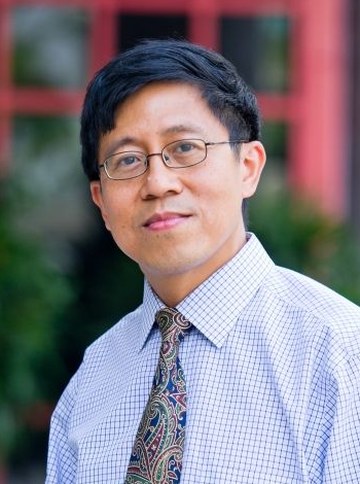 Keynote Speaker
Prof. Ngo Chong Wah
Lee Kong Chian Professor of Computer Science
School of Computing and Information Systems, Singapore Management University (SMU), Singapore
- Director, Human-Machine Collaborative Systems Cluster
- Multimedia Systems
- Human-Machine Collaborative Systems
TalkVideo Reasoning in Cultural Contexts
Abstract
Multimodal large language models (MLLMs) have made substantial progress in video question answering (QA). Yet their ability to understand cultural content beyond what is directly visible remains largely underexplored. Cultural understanding requires reasoning over implicit knowledge, traditions, social norms, and temporal context, rather than simply recognizing objects, scenes, or actions. This talk examines the capabilities of MLLMs in cultural video QA, with a particular focus on their ability to recognize cultural concepts and ground supporting evidence in long-form videos. It will highlight both the strengths and current limitations of MLLMs, discuss key challenges in culture-aware video understanding, and outline promising research directions toward context-aware multimodal reasoning. The talk will also introduce the Cultural Moment Benchmark (CMB), a new benchmark designed to evaluate the capabilities of MLLMs in recognizing, grounding, and reasoning about cultural concepts in Southeast Asian (SEA) videos.
-
 SRW 2026 Keynote Speaker
Prof. Cong Wang
Chair Professor and Head, Department of Computer Science
City University of Hong Kong, Hong Kong
- IEEE Fellow
- Data Security and Privacy
- AI Systems and Security
- Blockchain Security
TalkAI x Cybersecurity: Navigating Challenges and Embracing Opportunities
Abstract
As AI becomes deeply embedded across the digital stack, the intersection of AI and security has become a critical frontier. This talk examines this evolving landscape, dissecting the expansion of attack surfaces within AI infrastructure, the weaponization of AI for sophisticated exploitation, and the strategic roadmaps required to secure our future. We conclude with a deep dive into recent advancements from CityUHK CS focused on the synergy of AI, security, and trustworthy systems.
-
 Keynote Speaker
Asst. Prof. Dr. Thittaporn Ganokratanaa
Assistant Professor
Department of Mathematics, Faculty of Science, King Mongkut's University of Technology Thonburi (KMUTT), Thailand
- Secretary, IEEE Thailand Section
- Committee, Artificial Intelligence Association of Thailand (AIAT)
- Computer Vision
- Image Processing
- Machine Learning
TalkFrom Pixels to Progress: AI for a Smarter, Safer, and Sustainable World
Abstract
Artificial Intelligence (AI) and Computer Vision (CV) are rapidly transforming how machines perceive, interpret, and interact with the world, creating new opportunities to address complex societal challenges. From traditional image processing techniques to advanced deep learning architectures, these technologies have evolved into powerful tools for developing intelligent, adaptive, and sustainable solutions across diverse domains.
This keynote explores the evolution of AI and Computer Vision through a series of research contributions and real-world applications, highlighting the transition from conventional feature-based approaches to deep learning-driven intelligent systems. Particular emphasis is placed on deep spatiotemporal learning frameworks for video anomaly detection, including Deep Spatiotemporal Translation Networks (DSTN) and Deep Residual Spatiotemporal Translation Networks (DR-STN), which enhance the detection and localization of abnormal events in surveillance environments.
The presentation further demonstrates how AI can contribute to human well-being through intelligent healthcare applications, including automated cataract detection and electromyography (EMG)-based robotic prosthetic systems. Beyond healthcare, the keynote highlights AI-driven innovations for smart cities and sustainable development, featuring real-time traffic incident detection using Edge AI, digital healthcare platforms, and regional AI literacy initiatives such as AI Ready ASEAN.
Drawing on research experiences, technological innovations, and practical implementations, this keynote emphasizes the importance of bridging the gap between academic research and real-world impact. It also discusses the opportunities and challenges of developing responsible, accessible, and scalable AI solutions that support digital transformation, public safety, healthcare accessibility, and sustainable development.
Ultimately, the keynote illustrates how advances in AI and Computer Vision can transform pixels into meaningful intelligence, driving progress toward a smarter, safer, and more sustainable world.